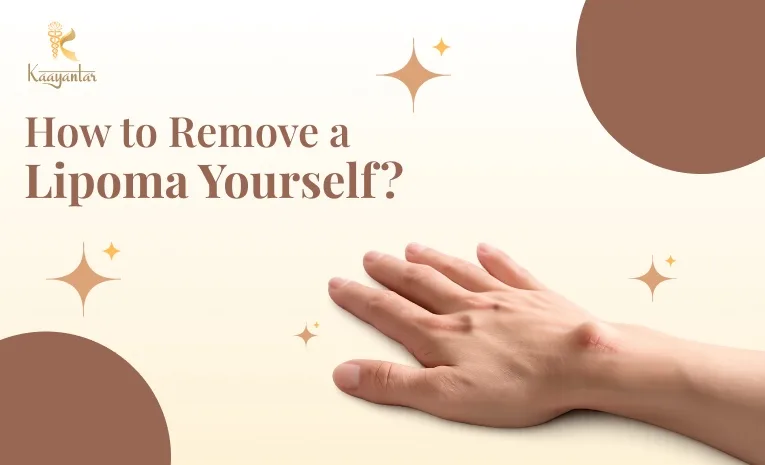
You found a soft lump under your skin. You pressed it. It moved. It did not hurt. You told yourself, maybe I can just handle this at home. So you searched: how to remove a lipoma yourself.
Stop right there. Because that search is not really about curiosity. It is about avoiding a doctor’s visit, skipping costs, or simply wanting control over something sitting on your body uninvited. That is understandable. But before you go further, you need the truth. Not a list of oils. The truth.
What You Are Really Asking
When someone searches how to remove a lipoma yourself, they usually mean one of two things.
Either they want to physically cut it out or squeeze it out on their own. Or they want a natural remedy that will dissolve it quietly over time.
Both paths lead to the same place. Disappointment. And in the first case, something worse.
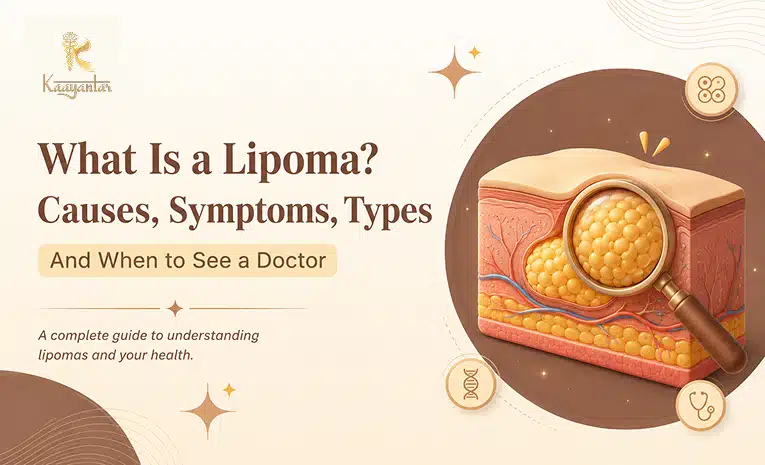
A lipoma is a benign lump of fat cells sitting beneath your skin, enclosed in a fibrous capsule. It is not a cyst you can simply drain. It is not a surface growth you can scrub away. It has a defined structure, a wall, and often sits close to nerves and small blood vessels. Removing it is not a squeezing job. It is a surgical one.
Why You Have It — And Why It Is Not Your Fault
Lipomas are not caused by eating poorly or living carelessly. Genetics play the largest role. If a parent had one, your chances are higher. They appear most often between forty and sixty years of age. An old injury can trigger one at that site. Occasionally a medical condition is involved.
You did not bring this on yourself. Life causes this. Not laziness.
This matters because guilt-driven self-treatment is one of the most common patterns we see. People blame themselves for the lump and then spend months trying home remedies as a form of self-correction. Recognise that cycle. Then step out of it.
How to Remove a Lipoma Yourself
Let us go through every method people try. One by one. With complete honesty.
Cutting it out at home
Some people actually attempt this. They watch videos, pick up a blade, and try. Do not do this. Ever.
Without local anaesthesia, you will cut into live, sensitive tissue. The pain alone can cause shock. Without a sterile field, infection is almost guaranteed. Without proper tools and training, you will not remove the entire capsule. What gets left behind grows back. And without proper wound closure, you are looking at a permanent jagged scar far more visible than the original lump ever was.
This is not a minor procedure being done in a less ideal setting. This is an unprepared person cutting into their own body without the means to control bleeding, prevent infection, or manage what they find underneath.
Squeezing or pressing it out
A lipoma has a capsule. It does not pop. It does not come out with pressure the way a blackhead might. Pressing hard on it repeatedly does nothing except irritate the surrounding tissue. Some patients come in after weeks of doing this. The lump is inflamed, tender, and now harder to remove cleanly. They made a simple procedure more complicated.
Castor oil, turmeric, apple cider vinegar, sage, chickweed
These are the ones you will find on every blog. Applied daily. Covered overnight. Repeated for weeks.
Here is the reality. Turmeric has anti-inflammatory properties. So does castor oil. Neither one dissolves fat encased in a fibrous capsule sitting under a layer of skin. Anti-inflammatory does not mean fat-dissolving. These are different biological processes entirely.
Apple cider vinegar, when applied undiluted to skin, can cause chemical burns. Not shrinkage.
What we see often in consultation is patients who tried these methods for six months, sometimes a year. The lump did not shrink. It grew. And now it is larger, meaning a longer incision, more complex removal, and a more visible scar than it would have been earlier.
Natural methods may support your body. They do not remove a lipoma.
Essential oils, massage, dietary changes
No essential oil penetrates deep enough to reach a subcutaneous lipoma. Massage does not break up the capsule wall. And while a healthy diet supports your overall health, lipomas are not caused by eating poorly. They form due to genetics, age, and factors you largely cannot control. Eating less fat does not make an existing lipoma disappear.
There is no proven, safe, effective way to remove a lipoma yourself at home. That is the complete answer to the question.
Diagnosis – This Is Where Things Go Wrong
This is where things go wrong most often.
People assume that because the lump is soft and painless, it must be a lipoma and it must be harmless. That assumption is usually correct. But not always.
A swollen lymph node, a cyst, and in rare cases something more serious can feel almost identical from the outside. A liposarcoma, which is cancerous, can mimic a lipoma in early stages. The only way to know for certain is a proper clinical examination. Sometimes with an ultrasound. Sometimes with a biopsy after removal.
Do not self-diagnose. Do not self-treat. If the lump grows rapidly, becomes firm, stops moving freely, or causes pain, see someone that week. Not next month.
What Actual Treatment Looks Like
Simple. Because it usually is.
Local anaesthesia. Small incision. The lipoma and its capsule are removed completely. Same-day discharge. Mild soreness for two or three days. Stitches gone within two weeks.
The scar at one month appears red and slightly raised. At six months it has calmed considerably. By eighteen months most patients are genuinely surprised by how subtle it has become.
The trade is straightforward. A flat, fading scar where a visible lump used to be. Most people find that worth it.
Why Kaayantar
This is what it looks like in real life:
- Every case is examined individually before any recommendation is made
- You are told honestly whether removal is needed now or if monitoring is appropriate
- Scarring timelines are discussed in full before you consent to anything
- Pricing is transparent from day one, with no surprises at billing
- Post-removal follow-up is part of your care, not an afterthought
Patients return not because we promised the best outcomes. Because we told them the truth from the beginning.
Book a Consultation
FAQs
Q1. Can I squeeze a lipoma out myself?
No. Lipomas have a capsule wall. They do not come out with pressure. Trying to squeeze one inflames the area and complicates future removal.
Q2. Will castor oil or turmeric remove my lipoma?
No scientific evidence supports this. These ingredients have anti-inflammatory properties but cannot dissolve fat enclosed in a fibrous capsule. They will not make the lipoma disappear.
Q3. What if the lump is painful?
See a doctor promptly. Pain may mean the lipoma is pressing on a nerve or vessel, or it may not be a lipoma at all.
Q4. Will the scar be permanent and visible?
Month one: the scar is noticeable. Month six: it has softened and faded considerably. Month eighteen: most patients are relieved by how much it has blended with surrounding skin. The lipoma was visible every day. The scar, with time, will be far less so.
Q5. Is removal expensive? Does insurance cover it?
If the lipoma causes pain or functional problems, many Indian insurance policies cover removal. Cosmetic-only cases may not be covered. Ask your clinic for proper documentation before your procedure.
Q6. Can it come back after removal?
Recurrence at the same site is rare when the entire capsule is properly removed. Recurrence rates with proper excision are under five percent. New lipomas may develop elsewhere over time, but that is unrelated to the original removal.
Stop searching for shortcuts. One proper consultation gives you the clarity that months of home remedies never will.
Book with Kaayantar today. Know what it is. Know your options. Move forward without second-guessing.
Because a lump left unexamined does not wait. Neither should you.
| Other Related Post | |
| How to Reduce Lipoma Naturally | Lipoma, Causes, Symptoms & Best Treatment Options |